Blue Flowers: A Designer Review for Business Merch
As an embroidery designer who specializes in commercial branding and small business merchandise, I approach every new machine embroidery design with a critical eye. When evaluating the "Blue Flowers" asset from the Bouquets Bunches category, my primary focus is not just aesthetic appeal, but production viability. For shop owners, Etsy sellers, and apparel decorators, a design must translate well from screen to fabric while maintaining structural integrity across various branded items. This review breaks down how Blue Flowers performs as a professional asset for custom apparel, patches, and business identity.
Visual Personality and Brand Alignment
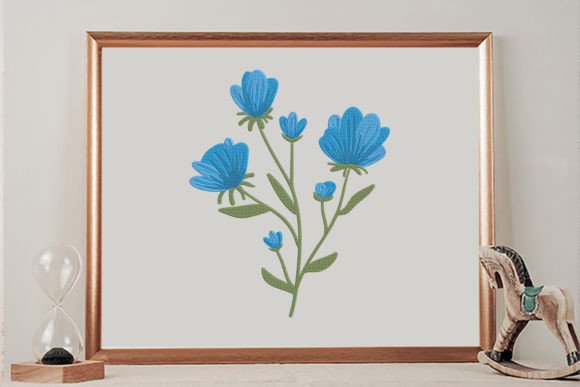
The first impression of Blue Flowers is distinctly whimsical yet structured enough for commercial application. While the product description highlights its charm for home decor, my assessment focuses on its utility for brand identity. The floral motif strikes a balance between playful and elegant, making it highly versatile for businesses that want to project warmth without sacrificing professionalism. It avoids being overly juvenile, which is a common pitfall in floral embroidery intended for adult markets.
For a local florist, bakery, or creative studio, this design communicates a handmade, artisanal quality that builds customer trust. It feels organic rather than corporate, which is essential for businesses relying on personal connection. However, because it leans towards a "fun and whimsical accent," it may require color adjustments to suit more formal uniforms. As a designer, I see this as a strong candidate for boutique merchandise where the goal is to create an emotional connection with the buyer through soft, approachable visuals.
Commercial Applications for Small Business Merch
When integrating Blue Flowers into small business merch, versatility is key. Based on the design’s composition, here is how I recommend deploying it across different product lines:
- Apron Embroidery: This is perhaps the strongest use case. Placing Blue Flowers on the chest pocket area of a canvas apron creates an immediate focal point for café staff or florists. The design adds character to functional workwear without interfering with movement or utility.
- Tote Bag Design: Natural cotton totes provide an excellent canvas for this motif. The whimsical nature of the flowers complements the eco-friendly vibe of reusable bags, making them attractive retail add-ons or customer gifts.
- Embroidered Patch Production: With proper digitizing verification, Blue Flowers can be adapted into standalone patches. These are valuable for limited-edition drops or as collectible branding elements for craft businesses.
- Cap Embroidery: While possible, this requires careful placement. The design works best on unstructured dad hats or bucket hats where the fabric yields to the stitch. Structured caps may distort the floral details unless the design is specifically resized for curved surfaces.
- Sleeve Details: For uniform polos or sweatshirts, placing a smaller iteration of Blue Flowers on the sleeve cuff or shoulder seam offers subtle branding that doesn't compete with a primary chest logo.
Production Constraints and Technical Considerations
A beautiful digital embroidery file can fail if technical limits are ignored. When preparing Blue Flowers for commercial embroidery, you must evaluate specific production variables. The description mentions stitching on t-shirts and towels, but these fabrics behave very differently under needle penetration.
Fabric Texture and Stabilizer Selection
Towels present a high-pile challenge. If you are branding spa linens or kitchen towels with Blue Flowers, you must use a water-soluble topping to prevent the stitches from sinking into the loops. Without this, the intricate details of the bouquet will disappear. Conversely, for lightweight t-shirts, the concern is puckering. You will need a lightweight cut-away stabilizer to support the stitch density without adding bulk that makes the garment unwearable. Always test on the exact fabric texture you intend to sell before running a full production batch.
Scaling and Detail Retention
One of the most frequent issues I encounter with floral designs is loss of clarity at small sizes. Before using Blue Flowers for hat fronts or pocket logos, verify the minimum size threshold. Intricate petals and leaves often merge when reduced below three inches. If the embroidery file lacks sufficient spacing between elements at smaller scales, the result will look muddy. For cap embroidery specifically, ensure the design height does not exceed the safe stitch area of your cap frame, and consider simplifying internal details if scaling down significantly.
Impact on Product Value and Customer Perception
In the competitive landscape of handmade products and custom apparel, perceived value drives pricing power. Blue Flowers contributes to a premium presentation when executed correctly. A crisp, well-registered floral accent signals attention to detail. Customers associate high-quality embroidery with overall business competence. When a patron sees a cleanly stitched botanical motif on a barista’s apron or a shop owner’s tote, it reinforces the narrative of care and craftsmanship.
Furthermore, consistent use of specific design assets like Blue Flowers across multiple touchpoints—packaging, uniforms, and merchandise—creates visual cohesion. This consistency aids in brand recognition. Unlike generic clip art, a distinct floral style becomes ownable intellectual property for your shop. It transforms a standard commodity into a branded experience, justifying higher price points for handmade product lines and fostering loyalty among customers who appreciate aesthetic intentionality.
Essential Pre-Production Checklist for Designers
Before loading Blue Flowers into your machine for a client order or inventory build, run through this professional validation process. Skipping these steps is the difference between a profitable product and costly rework.
- Verify Commercial Licensing: Never assume a design is cleared for resale. Confirm the license terms explicitly allow for commercial embroidery on merchandise before listing any item for sale.
- Check Hoop Size Compatibility: Ensure the design dimensions fit comfortably within your available hoops with adequate margin for clamping. Overstretching fabric to fit a design leads to registration errors.
- Test Thread Colors and Contrast: Monitor how the blue tones interact with your base fabric. Dark navy on black fabric lacks definition; light sky blue may vanish on white linen. Adjust thread colors to ensure visibility and brand alignment.
- Create a Printable Mockup: Use software to generate a printable mockup for client approval. This manages expectations regarding size and placement before a single needle penetrates fabric.
- Inspect Stitch Density: Run a sew-out on scrap material. Check for excessive density that causes bulletproofing or fabric distortion. If the center of the flower feels stiff, the file may need editing for wearable applications.
- Evaluate Washability: If the end use involves frequent laundering (like chef coats or salon towels), test the design’s durability. Ensure satin stitches are secure and underlay is sufficient to prevent fraying over time.
- Compare Beside Other Assets: Place Blue Flowers next to your existing logo and typography. Ensure the visual weight matches. A delicate flower paired with a heavy industrial font creates dissonance; aim for stylistic harmony.
Final Verdict for Business Integration
Blue Flowers is a promising asset for businesses seeking to soften their brand image while maintaining commercial relevance. Its strength lies in its adaptability across apron embroidery, tote bags, and boutique accessories. However, success depends entirely on technical diligence. By respecting fabric limitations, verifying licensing, and testing rigorously, you can transform this whimsical design into a powerful tool for brand identity and sales growth. Always treat this finished product as a component of a larger business strategy, ensuring every stitch serves both aesthetic and commercial purposes.